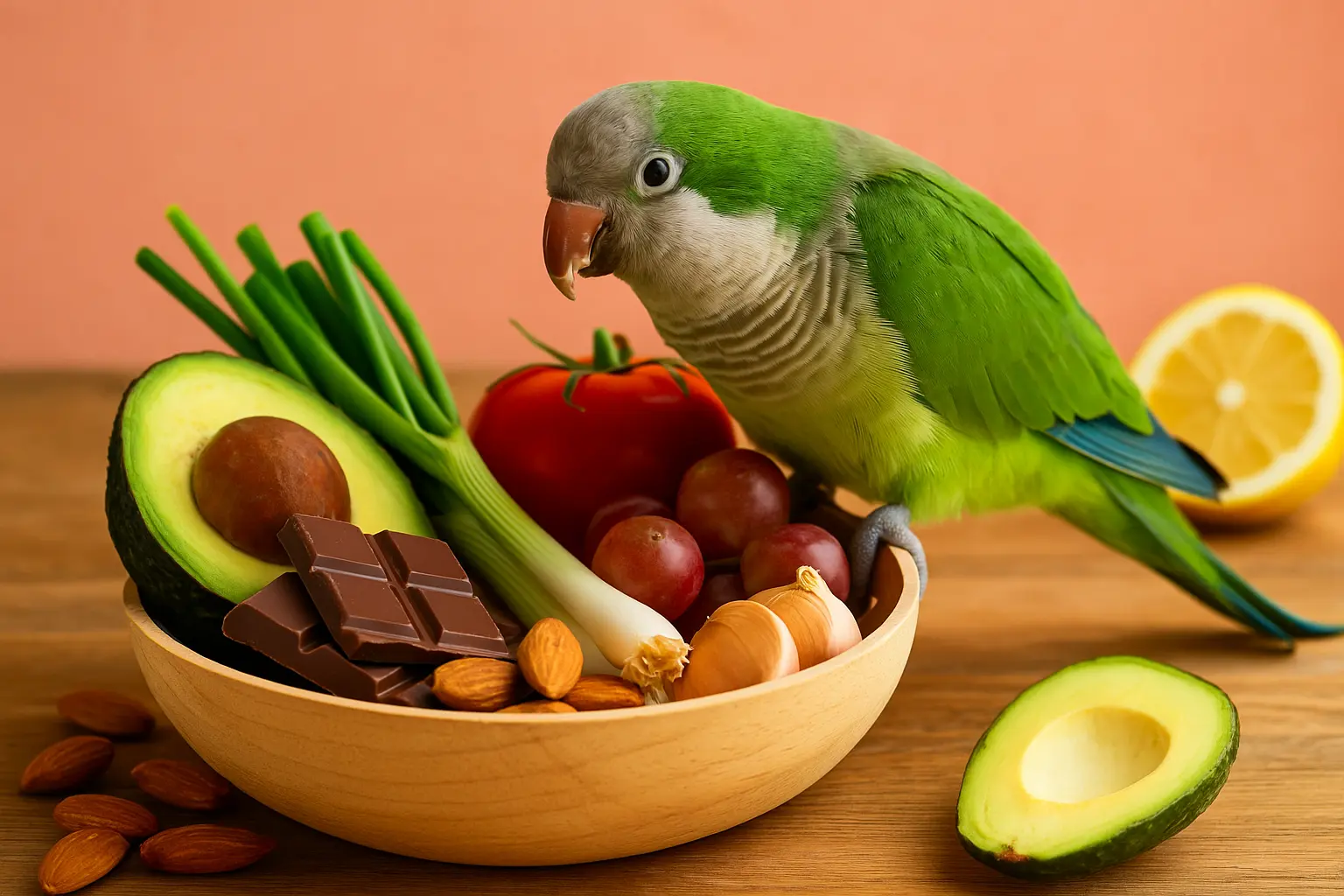
Some fruits, vegetables, and snacks that seem safe for humans are actually toxic foods for parrots. Even a small bite of things like avocado, raw eggplant, or certain seeds can make your parrot very sick, or even be life-threatening. That’s why every parrot owner needs to know which foods to avoid.
Why are these common foods risky for your parrot? Most people are surprised to find out that the danger isn’t just in chocolates or junk food, but in everyday items found in almost every kitchen. Is your parrot safe from these hidden dangers? Let’s find out what really makes some foods toxic for parrots.
Most people have no idea how many foods or meals can actually be toxic foods for parrots. Even I made many mistakes as a beginner, giving my birds the wrong foods, and sadly, I lost some beloved parrots because of this. Tamed parrots spend so much time with their owners, often eating and sharing food together. Owners usually offer whatever their parrot loves to eat, without thinking that it could actually be harmful—even if it’s something the parrot enjoys. This doesn’t mean you should never give those foods, but you need to know the right quantity and timing.
For example, my Sun Conure rocky loved eating flatbread with tea—a common breakfast in many Asian homes. He enjoyed oily foods so much that it became a habit. But feeding these foods every day is risky, and it took me time and effort to help him break this habit. There are many foods you should completely avoid, and some that can be given only rarely in very small amounts. Here’s a practical safety guide for every parrot owner.
If you ever see signs of bird poisoning after any food mistake (vomiting, trouble breathing, or unsteady grip), get help quickly.
Many people also share small pieces of plain flatbread (roti, tortilla, pita bread) or plain rice with their parrots. While a tiny piece of unsalted, unbuttered bread or plain boiled rice can be given once in a while, it should never be a regular food. These foods have almost no nutrition for birds and too much can make them sick. Always avoid anything that is salty, sweet, oily, fried, or has artificial flavors and colors.
If your parrot eats any harmful chemical or food, try not to panic. Look for any warning signs like vomiting, trouble breathing, weakness, or sitting still for too long. If you notice serious symptoms, do not experiment at home—take your parrot to a bird vet right away.
If it’s just a small amount of regular junk food, don’t worry too much. It does not harm your parrot if given only occasionally, but never make it a habit. This does not mean you should never give your parrot their favorite treats, but avoid offering them every day. To support their health, give multivitamins regularly, always provide clean and fresh feed, and never leave food out for too long. Try to follow a proper feeding schedule for your bird.
I hope this guide helps you avoid these common mistakes and keeps your parrot healthy for a long and happy life. Every little change in diet makes a big difference—always double-check before giving anything new to your bird.
If you have any questions, feedback, or need more help about parrot care, feel free to email me at parrotscuisine@gmail.com. I always try to reply as soon as possible!
Avocado, chocolate, fruit seeds like apple and cherry, raw rhubarb, salty snacks, and all processed or fried foods are harmful for parrots. Always double-check before giving any new food.
Yes, milk and most dairy products are toxic for parrots. Parrots cannot digest lactose, and milk can cause diarrhea and digestive issues.
Fresh fruits (with no seeds), vegetables, and tiny amounts of plain cooked rice or bread (no salt, oil, or spices) can be safe. Never give processed food, junk food, or sweets.
Plain boiled egg (no salt, oil, or spices) is safe for parrots and can be given as an occasional treat for extra protein. Always give in small amounts only.
Avocado contains persin, a toxin that can cause heart failure or death in parrots, even in very small amounts.
Yes, most fruit seeds—especially apple, cherry, pear, and plum—have natural chemicals that turn into cyanide in a parrot’s body. Always remove seeds before feeding.
Vomiting, watery droppings, loss of appetite, trouble breathing, weakness, or sitting puffed up and quiet can all be signs of food poisoning in parrots.
Most store-bought dried fruits contain too much sugar or preservatives and are not safe for parrots. If you give any, make sure it’s unsweetened and preservative-free—only a tiny amount.
It’s best to avoid cooked human food for parrots, as most dishes contain salt, oil, spices, or preservatives that are harmful to birds.
Fresh vegetables, a healthy seed mix, and some fruits (with no seeds) are safest for parrots. Avoid processed foods, salty or oily treats, and always provide clean water.